
1908 Coffee Rd, Suite 3
Modesto, California 95355Open 7 Days
Mon–Fri 8:00 AM–5:00 PM | Sat–Sun 9 AM–2 PMLaceration Repair in Modesto, CA
Cuts and open wounds should be evaluated promptly, especially when bleeding continues, the wound is deep, or the edges remain separated. Proper treatment can help control bleeding, lower the risk of infection, support healing, and reduce scarring.
At 209 Urgent Care, we provide same-day evaluation and repair for many uncomplicated lacerations. Depending on the injury, treatment may include wound cleaning, local anesthesia, stitches, adhesive closure, wound dressing, tetanus evaluation, and follow-up care.
Walk-ins are welcome seven days a week.
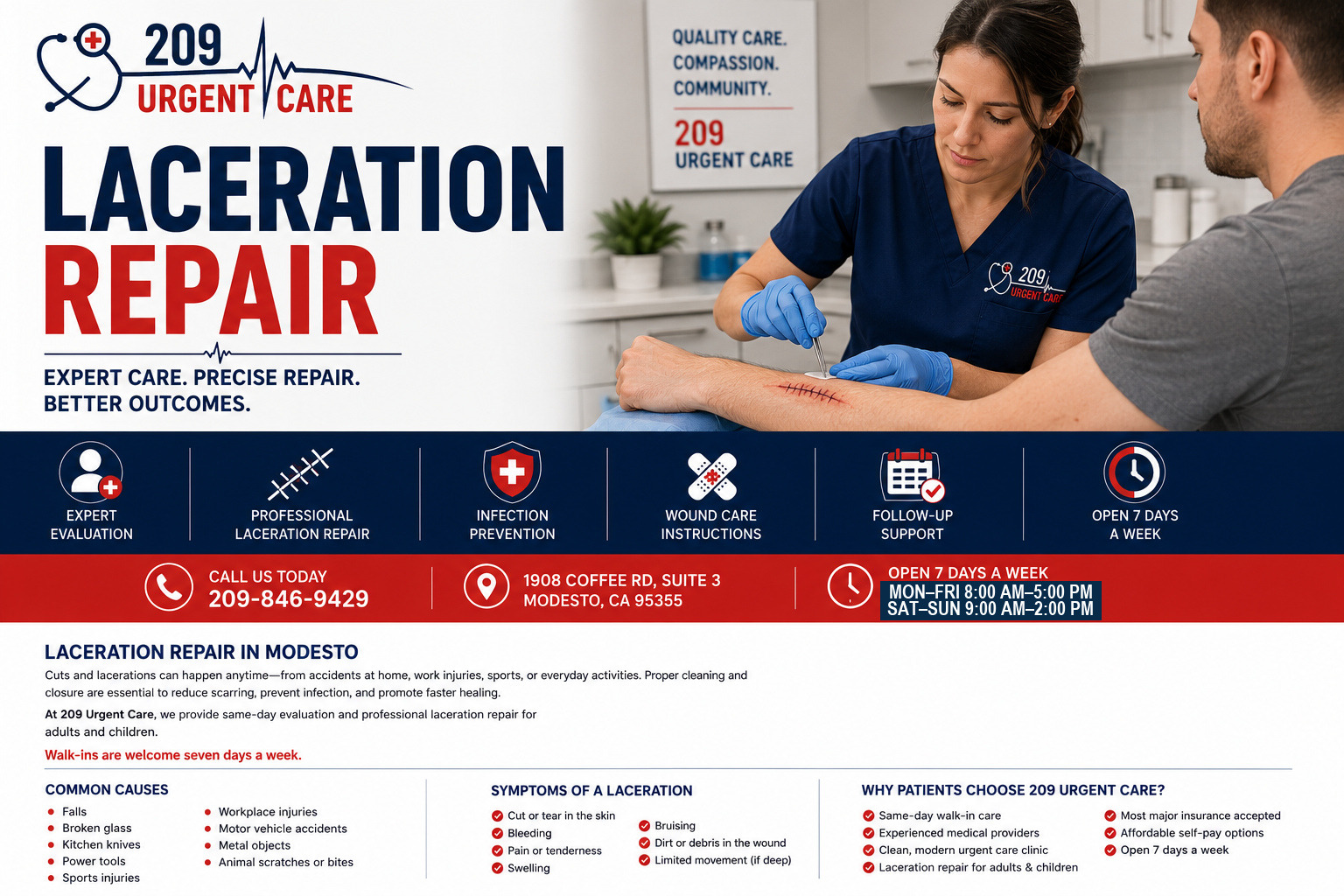
Same-day laceration repair, stitches, wound cleaning, and infection prevention at 209 Urgent Care in Modesto.
What Is a Laceration?
A laceration is a cut or tear in the skin caused by a sharp object, blunt trauma, broken glass, machinery, tools, or another injury. Some lacerations affect only the surface of the skin, while others may extend into deeper tissue.
The appropriate treatment depends on:
- Depth and length of the wound
- Location of the injury
- Time since the injury occurred
- Amount of contamination
- Whether nerves, tendons, joints, or blood vessels may be involved
- The patient’s age, health history, and tetanus status
Common Causes of Lacerations
Lacerations commonly occur from:
- Kitchen knives
- Broken glass
- Metal edges
- Tools and machinery
- Falls
- Sports injuries
- Workplace injuries
- Household accidents
- Animal scratches or bites
- Car or bicycle accidents
When Might a Cut Need Stitches?
A wound may need closure if:
- The edges remain separated
- The cut is deep
- Fat or deeper tissue is visible
- Bleeding continues despite direct pressure
- The wound is over a joint or high-movement area
- The cut is on the face, hand, finger, arm, leg, or scalp
- The wound is longer than a minor surface cut
- Movement causes the wound to reopen
Not every cut requires stitches. Some wounds may be treated with skin adhesive, closure strips, or dressing alone after medical evaluation.
When Should You Visit Urgent Care?
Seek prompt medical evaluation if:
- Bleeding does not stop after firm pressure
- The wound is deep, wide, or gaping
- The injury was caused by dirty or rusty material
- Glass, metal, wood, or another object may remain inside
- The wound is painful, numb, or difficult to move
- The injury is near a joint, tendon, nail, eye, or other sensitive area
- You may need a tetanus booster
- Redness, swelling, drainage, or fever develops
- The wound occurred at work and requires documentation
Earlier evaluation generally provides more closure options and allows the wound to be cleaned before infection develops.
When Should You Go to the Emergency Room?
Seek emergency care immediately for:
- Uncontrolled or spurting bleeding
- Severe blood loss
- Amputation or partial amputation
- Deep wounds involving exposed bone, tendon, or major muscle
- Loss of sensation or movement
- Significant crush injuries
- Wounds involving the eye
- Severe facial trauma
- Penetrating injuries to the chest, abdomen, neck, or head
- Major animal bites or extensive tissue damage
Call 911 for life-threatening bleeding or severe trauma.
How We Treat Lacerations
Treatment depends on the wound’s location, depth, contamination, and time since injury.
Care may include:
- Medical evaluation of the wound
- Bleeding control
- Examination of circulation, sensation, and movement
- Local anesthetic for comfort
- Thorough irrigation and wound cleaning
- Removal of minor surface debris when appropriate
- Sutures or stitches
- Skin adhesive
- Sterile closure strips
- Antibiotic ointment and dressing
- Tetanus vaccination when indicated
- Antibiotics when medically appropriate
- Home wound-care instructions
- Follow-up and suture-removal guidance
- Referral for imaging when a retained foreign body or underlying injury is suspected
- Emergency or specialist referral for complex injuries
209 Urgent Care does not have on-site X-ray. When imaging is medically indicated, patients are referred to an appropriate imaging center or higher level of care.
Caring for Stitches at Home
Follow the instructions provided during your visit. General care may include:
- Keep the wound clean and protected
- Keep the initial dressing in place as directed
- Avoid soaking the wound
- Do not pick at stitches, adhesive, or scabs
- Change dressings with clean hands
- Limit activity that pulls on the wound
- Return for suture removal at the recommended time
- Watch for increasing redness, warmth, swelling, pus, fever, or worsening pain
Seek reevaluation if the wound opens or signs of infection develop.
Tetanus Protection
A tetanus booster may be recommended depending on:
- The type of wound
- Whether the wound was dirty or contaminated
- Your vaccination history
- How long it has been since your last tetanus shot
Your provider will review your history and recommend vaccination when appropriate.
Why Patients Choose 209 Urgent Care?
Patients choose us for:
- Same-day walk-in evaluation
- Experienced medical providers
- Wound cleaning and repair
- Stitches, adhesive, and closure strips when appropriate
- Tetanus evaluation
- Work-injury documentation
- Follow-up and suture-removal care
- Most major insurance accepted
- Affordable self-pay options
- Open seven days a week
Frequently Asked Questions
How soon should a cut be evaluated?
Cuts that may need closure should be evaluated as soon as possible. Delaying care may increase infection risk and reduce the available closure options.
Do all deep cuts need stitches?
No. Treatment depends on the wound’s depth, location, age, contamination, and whether the edges can be safely brought together.
Are stitches painful?
The wound is typically numbed with local anesthetic before repair. Patients may feel pressure or movement but should not feel sharp pain during suturing.
How long do stitches stay in?
Removal time varies by body location and wound tension. Facial stitches are often removed sooner than stitches on the hands, arms, legs, or joints. Your provider will give specific instructions.
Can urgent care remove stitches?
Yes. 209 Urgent Care can evaluate healing and remove sutures when appropriate.
Will I need antibiotics?
Not every laceration requires antibiotics. They may be prescribed when the wound is contaminated, infected, caused by a bite, or has other risk factors.
What are signs of wound infection?
Warning signs include increasing redness, warmth, swelling, pus, worsening pain, red streaking, fever, or delayed healing.
Visit 209 Urgent Care Today
A deep or open cut should not be ignored. Prompt evaluation can help control bleeding, determine whether closure is needed, and reduce the risk of complications..
Walk-ins are welcome every day.
📍 1908 Coffee Rd., Suite 3
Modesto, CA 95355
📞 209-846-9429
Open 7 Days a Week
Hours
- Mon–Fri: 8:00 AM–5:00 PM
- Sat–Sun: 9:00 AM–2:00 PM
Related Services
- Burn Treatment
- Cellulitis Treatment
- Skin Abscess Treatment
- Sprains & Strains
- Occupational Medicine
- Workers’ Compensation
- Medical Services
- Conditions We Treat
Serving Modesto & Nearby Communities
209 Urgent Care proudly provides sprain and strain evaluation and treatment for patients from:
- Modesto
- Ceres
- Riverbank
- Salida
- Ripon
- Oakdale
- Escalon
- Hughson
- Turlock
- Patterson
- Manteca
- Surrounding communities
Medical Disclaimer
Information on this page is intended for educational purposes only and does not replace evaluation by a qualified healthcare provider. Treatment recommendations depend on your symptoms, medical history, physical examination, and provider assessment.
Need care today?
Walk in when convenient, reserve an arrival window, or contact the clinic before you come.